
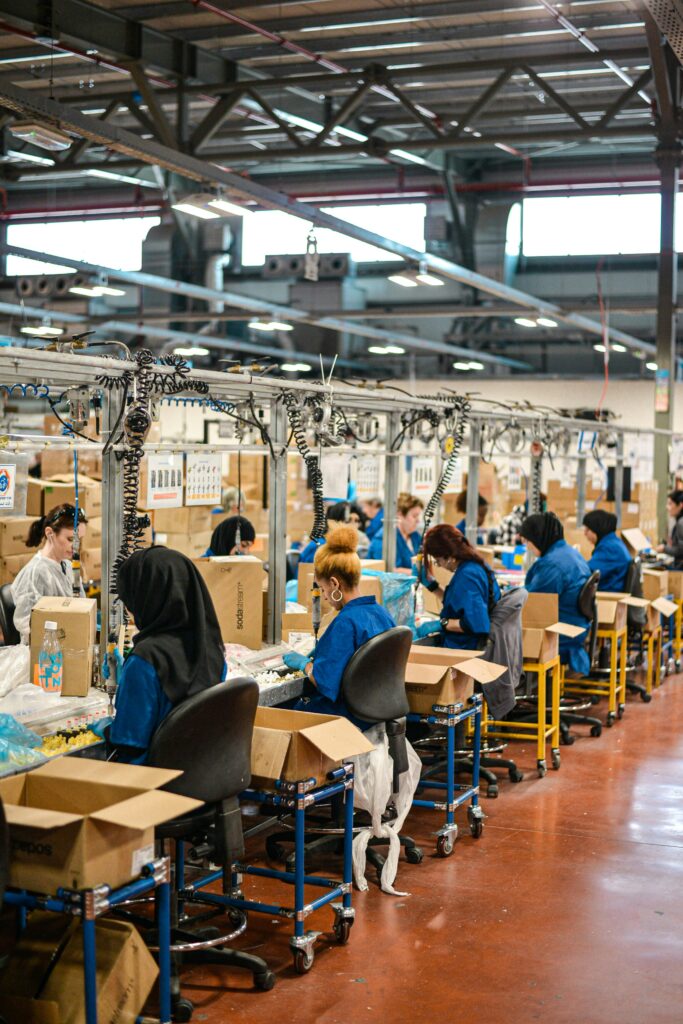
When B2B buyers and founders in the outdoor, travel, and tech-wear industries plan a new product line, they often view manufacturing as a black box. Typically, you send a tech pack overseas, wait a few months, and simply hope the finished cargo matches your vision.
However, for technical gear—such as weather-sealed urban backpacks, modular tactical packs, or rugged canvas carryalls—hoping for the best is a dangerously risky strategy. In fact, a single millimeter error in pattern grading, improper stitch tension on heavy-duty webbing, or incorrect seam allowances can render an entire production run completely useless. Consequently, for brands based in the US, Europe, Australia, Japan, and Korea, the primary source of anxiety during production isn’t just shipping deadlines. Instead, it is the persistent fear of technical mistakes, incorrect sampling, and structural failure. Moreover, when manufacturing functional carry goods, the Cut and Sew process is precisely where engineering meets craftsmanship.
As a leading canvas backpack manufacturer in Vietnam, Mimicry Sai Gon demystifies the technical Cut and Sew workflow step-by-step, highlighting precisely where structural risks occur and showing how professional product development prevents costly manufacturing errors.
What Is the “Cut and Sew” Process in Technical Bag Manufacturing?
Unlike purchasing off-the-shelf blank products and simply adding a screen-printed logo, Cut and Sew is a complete, custom manufacturing method. Specifically, every panel, lining, foam layer, webbing strip, and zipper track is individually cut from raw material rolls and assembled according to precise technical drawings (Tech Packs).
-
PHASE 1: Pre-Production & Pattern Engineering (Tech pack audit, digital pattern drafting, 2D/3D nesting, stress-tested prototyping)
-
PHASE 2: Precision Cutting & Material Preparation (Fabric inspection, laser/die cutting, foam shaping, sub-component bundling)
-
PHASE 3: Sub-Assembly & Heavy-Duty Stitching (Pocket modularization, bar-tack reinforcement, weather-sealing, main shell assembly)
-
PHASE 4: Quality Control, Inspection & Global Shipping (AQL 2.5 defect audits, tensile testing, IATA compliant freight preparation)
Step 1: Pre-Production, Tech Pack Auditing & Pattern Engineering
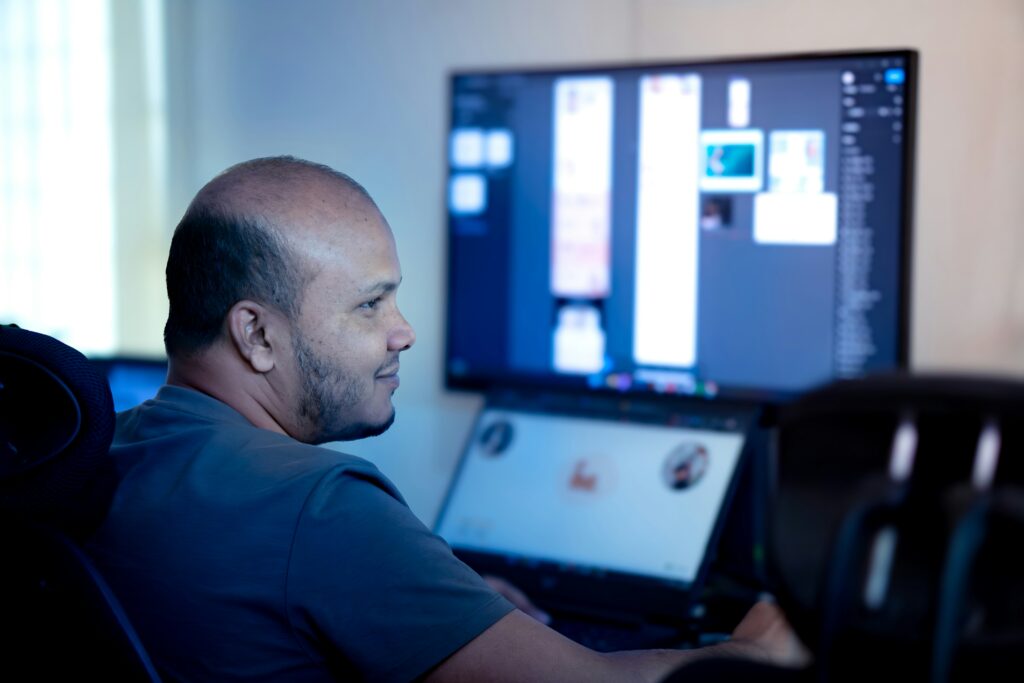
Before a single piece of fabric touches a cutting table, extensive technical engineering takes place. As a result, a high-performance bag functions as a complex 3D structure assembled from dozens—sometimes over 100—flat 2D pattern pieces.
The Technical Process:
-
Tech Pack Deconstruction: Engineers review your Bill of Materials (BOM), dimension callouts, stitch-per-inch (SPI) requirements, and seam allowances.
-
Digital Pattern Drafting & Nesting: Pattern makers create 2D patterns using specialized CAD software. Digitally “nesting” the pattern pieces on fabric layouts maximizes material yield and reduces waste.
-
Prototyping & Stress Testing: A “Golden Sample” is sewn and subjected to load-bearing, water-immersion, and abrasion tests.
Where Unchecked Factories Make Errors:
Inexperienced factories often skip digital pattern nesting or fail to calculate fabric shrink rates during coating/lamination. This leads to crooked pockets, misaligned zippers, and compromised load distribution across shoulder straps.
Step 2: Precision Material Cutting & Panel Preparation
Once the Golden Sample is approved, mass cutting begins. Working with heavy-duty textiles like waxed canvas, 500D/1000D CORDURA®, or X-Pac laminates requires specialized industrial machinery.
Cutting Methods Used by Top Manufacturers:
-
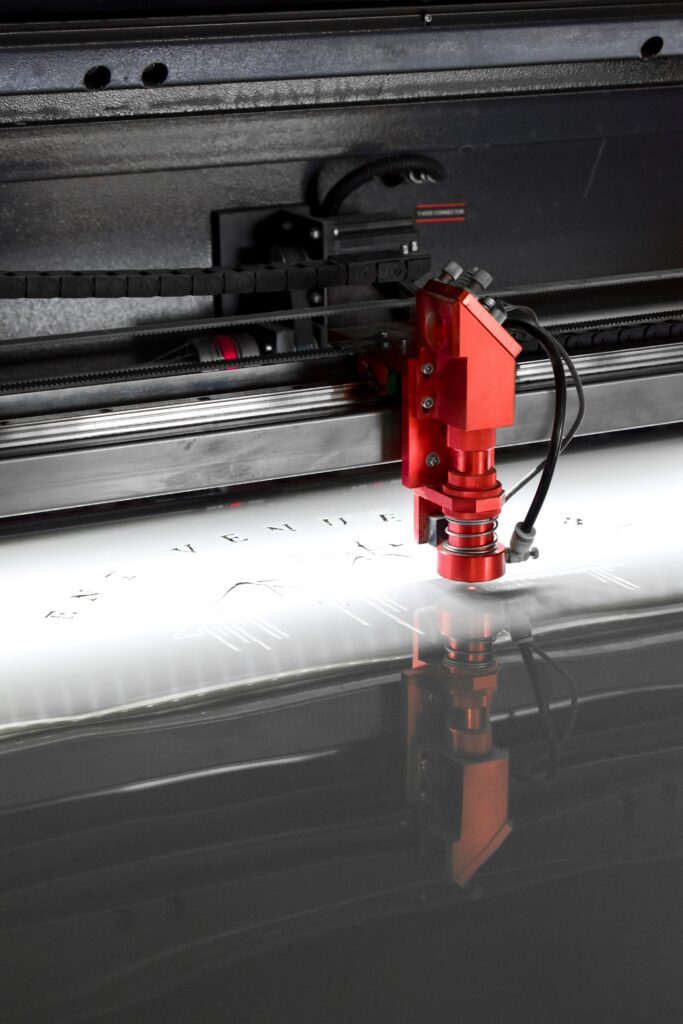
Laser Cutting: Essential for synthetic technical fabrics. Laser heat melts the cut edges, preventing fraying on raw panel edges.
-
Hydraulic Die Cutting: Used for multi-layered EVA foam padding, leather accents, and dense reinforcement boards.
-
Automated CNC Knife Cutting: Ideal for heavy cotton canvas and Cordura rolls, delivering millimeter-level consistency across thousands of panels.
Step 3: Sub-Assembly & Component Modularization
Technical backpacks are not sewn from top to bottom in a single linear line. Instead, the factory operates on a modular sub-assembly line where individual components are crafted simultaneously before final integration.
Key Sub-Assembly Stages:
-
Organizer & Harness Preparation: Sewing internal pen slots, fleece-lined laptop sleeves, and key clips.
-
Shoulder Strap & Back Panel Assembly: Inserting high-density EVA foam into contoured shoulder sleeves and stitching 3D air-mesh back panels for ventilation.
-
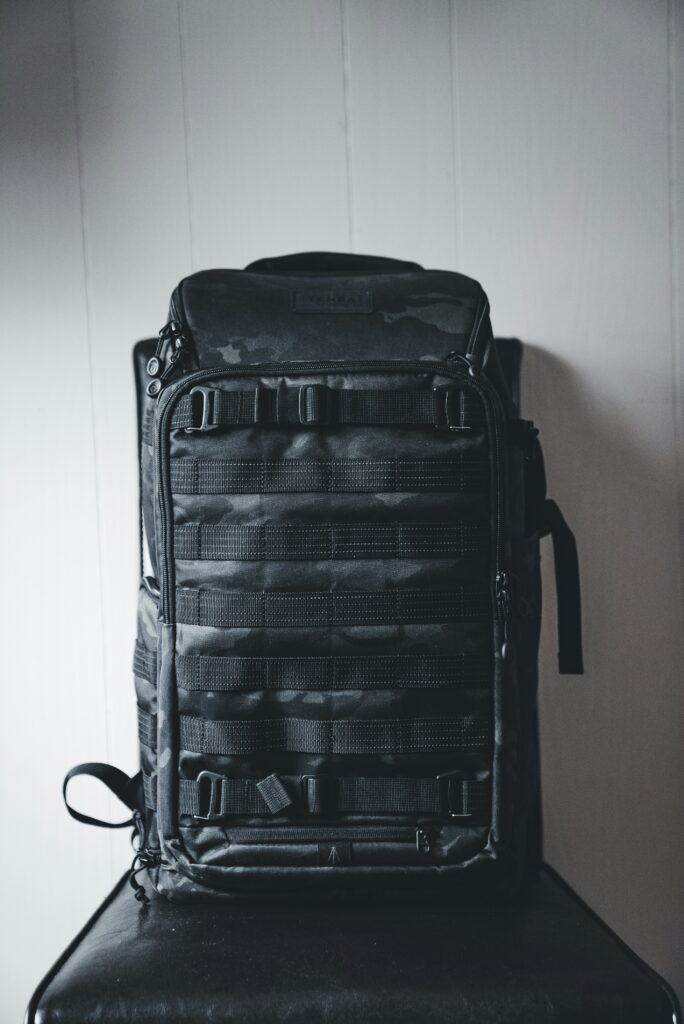
MOLLE & Webbing Reinforcement: Attaching heavy-duty nylon webbing grids using automated bar-tack machines.
Why Bar-Tack Calibration Matters:
A standard straight stitch will snap under heavy loads. High-stress points—such as top drag handles and shoulder strap junction points—must be reinforced with automated bar-tacks (dense grids of back-and-forth stitches). As an experienced canvas backpack manufacturer, we calibrate stitch density to match fabric weight, ensuring handles can withstand 20kg+ pull forces without tearing.
Step 4: Final Assembly & Technical Seam Sealing
During final assembly, all sub-assemblies (front panel, back harness, side pockets, and bottom boot) are joined to form the completed carry system. This is the most technically demanding phase of the Cut and Sew process.
Complex Assembly Techniques:
-
Binding Seams: Raw interior edges are encased in bias tape or heavy nylon binding to prevent unraveling and add structural rigidity.
-
Tape Sealing for Water Resistance: For weatherproof tech-wear bags, specialized hot-air seam-sealing machinery applies polyurethane tape over needle holes to block moisture entry.
-
3D Box Stitching: Joining rigid canvas or Cordura exterior shells with padded interiors without creating bulky, distorted corners.
For brands relying on a qualified Cordura bag supplier Vietnam partner, maintaining strict tolerances during final assembly ensures that every compartment aligns symmetrical to the frame.
Step 5: Quality Assurance, Metal Detection & International Logistics
The Cut and Sew process ultimately concludes with rigorous quality assurance. Before any product enters a shipping carton, it undergoes multi-stage inspections based on international AQL 2.5 standards.
QUALITY CONTROL CHECKLIST
-
[✓] 100% Metal / Needle Detection Test
-
[✓] Stitch Per Inch (SPI) Audit (6-8 SPI standard)
-
[✓] Zipper Smoothness & AquaGuard Tape Alignment
-
[✓] Load-Bearing Bar-Tack Stress Verification
-
[✓] Dimensional Tolerance Check ($\pm 3\text{mm}$ limit)
Global Freight & Logistics Compliance:
For international B2B brands shipping via air or ocean, proper packaging, dimensional weight management, and customs documentation are critical. Air shipments must comply with strict cargo safety guidelines managed by international authorities like IATA. Experienced suppliers ensure master cartons are packed securely to prevent crushing while optimizing container space to reduce freight costs.
How Mimicry Sai Gon Eliminates Technical Risks in Cut and Sew
Managing an overseas Cut and Sew operation can be daunting when you don’t have dedicated engineers on the factory floor. Mimicry Sai Gon bridges the gap between international brand expectations and local Vietnamese manufacturing precision.
MIMICRY SAI GON
Your trusted local partner, collaborating with you on bags/backpack design, product development, factory sourcing, quality control, and cost optimization.
Whether you need a specialized canvas backpack manufacturer or a high-capacity Cordura bag supplier Vietnam partner, we manage the entire production pipeline with complete transparency.
Our Main Services:
-
Handbag and Backpack Design: Transforming initial concepts, sketches, or reference samples into production-ready digital tech packs.
-
Product Development: Precise pattern drafting, material testing, and iterative prototyping to solve technical challenges before mass production.
-
Factory Sourcing: Directing your project to audited, specialized facilities in Vietnam without intermediaries, securing competitive pricing and optimal MOQs.
Extended Services for Complete Confidence:
-
Brand Design & Packaging Consulting: Custom retail boxes, protective polybags, and hangtags compliant with global retail standards.
-
Quality Control (QC): Dedicated inline inspections and final AQL 2.5 audits conducted by our in-house quality engineers.
-
Fast Delivery: Complete management of export logistics, customs clearing, and freight arrangements for hassle-free worldwide delivery.
Case Study: Precision Cut & Sew for an Australian Technical Carry Label
An Australian outdoor brand approached Mimicry Sai Gon after experiencing high defect rates with their previous supplier. Their heavy canvas and Cordura hybrid travel packs suffered from crooked zipper tracks, uneven shoulder strap lengths, and seam failures along stress points.
Our Solution:
-
Pattern Re-Engineering: Our product development team digitized their patterns, correcting the shoulder strap ergonomics and adjusting seam allowances for heavy waxed canvas.
-
Precision Execution: As a trusted canvas backpack manufacturer and Cordura bag supplier Vietnam expert, we placed production with an audited facility equipped with automated laser cutters and programmable bar-tacking machinery.
-
Inline QC: We conducted daily inline audits during the sub-assembly phase, checking stitch density and load-bearing resistance.
The Result:
Consequently, 1,500 units were delivered right on schedule with a 0.0% factory defect rate, successfully reducing total land costs by 14% through optimized material nesting and freight packing.

Summary: What to Demand from Your Manufacturing Partner
To protect your brand from technical mistakes during the Cut and Sew process, always insist on these four non-negotiables:
-
A Validated Golden Sample: Never approve mass production without physically testing an exact pre-production prototype.
-
Clear Tech Pack Callouts: Specify exact stitch-per-inch (SPI) counts, thread types (e.g., bonded nylon), and seam allowance tolerances.
-
Inline Quality Inspections: Ensure quality checks occur during sub-assembly, not just after the bags are finished.
-
On-Ground Expertise: Work with a local product development team in Vietnam that actively monitors the factory floor.


Partner with Mimicry Sai Gon for Technical Excellence
Mastering the Cut and Sew process requires technical mastery, specialized machinery, and uncompromised quality control. By partnering with Mimicry Sai Gon, you gain a dedicated local team that safeguards your designs, optimizes your costs, and ensures every bag meets international standards.
Ready to bring your next technical carry collection to life without structural risks?
👉 Consult with our product development experts today.
Visit Mimicry Sai Gon to schedule a free technical consultation and request a customized manufacturing roadmap for your brand.