
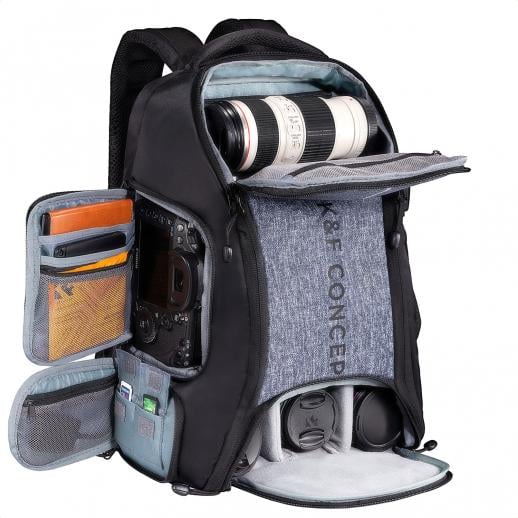

If you want to manufacture a custom backpack, sending a rough sketch or a Pinterest mood board to a factory won’t cut it. To turn your vision into a physical, mass-produced product without costly miscommunications, you need a blueprint. In the apparel and bag manufacturing industry, this blueprint is called a Tech Pack (Technical Package).
Whether you are working with a local workshop or a large-scale custom backpack manufacturer in Vietnam, a professional tech pack is your ultimate communication tool. In this guide, Mimicry Saigon breaks down exactly how to create a comprehensive backpack tech pack that guarantees your factory gets it right the first time.
What is a Tech Pack and Why Do You Need It?
A Tech Pack is an informative document created by designers to communicate with manufacturers. It contains all the technical specifications of your bag, including flat sketches, dimensions, materials, and construction methods.
Why is it crucial for custom bag development?
-
Minimizes Errors: Factories follow exactly what is on the document. No guesswork means fewer mistakes.
-
Accurate Quotes: A factory cannot give you an accurate cost per unit (FOB price) without knowing every zipper, buckle, and yard of fabric required.
-
Faster Prototyping: A clear tech pack dramatically speeds up the sample-making process. (Read more: [Insert Internal Link to Cluster 3: The Bag Prototyping Process])
5 Essential Components of a Backpack Tech Pack
Creating a custom bag tech pack is generally more complex than making one for a t-shirt because bags involve rigid hardware, 3D volume, and multiple layers of fabric. Here is what your document must include:
1. Technical Flat Sketches (CADs)
Your tech pack must start with black-and-white, 2D technical drawings (often created in Adobe Illustrator). You need to show the bag from multiple angles:
-
Front view, Back view, and Side views.
-
Inside views (showing laptop sleeves, mesh pockets, and lining).
-
Callouts (arrows pointing to specific details like hidden pockets or hydration ports).
2. Bill of Materials (BOM)
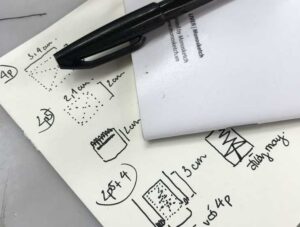
The BOM is the recipe for your backpack. It lists absolutely every physical component needed to build one single unit of your bag.
-
Main Body Fabric: (e.g., 500D Cordura Nylon, 1000D Ballistic Nylon).
-
Lining: (e.g., 210D Ripstop Polyester).
-
Hardware: Zippers, pullers, D-rings, magnetic buckles, and webbing.
-
Padding: EVA foam or PE foam thickness for the back panel and shoulder straps.
Pro Tip: If you specify brand-name hardware like YKK or Fidlock, state the exact part numbers. (Learn more about choosing the right components in our guide: [Insert Internal Link to Cluster 7: The Ultimate Guide to Backpack Hardware]).
3. Measurements and Specs Sheet
Bags are 3D objects, so precise measurements are vital. Your tech pack should include:
-
Overall height, width, and depth (to calculate the liter capacity).
-
Length of shoulder straps and webbing belts.
-
Pocket dimensions (e.g., “Must fit a 15-inch MacBook Pro”).
-
Tolerances (the acceptable margin of error, usually +/- 0.5 cm).
[Image Placeholder 3: Một bảng Excel hoặc bảng biểu (Table) hiển thị Bill of Materials (BOM) chi tiết có chia cột Material, Placement, Quantity]
4. Colorways and Artwork
If your backpack comes in multiple colors (e.g., Tactical Black, Olive Drab, Wolf Grey), you need to specify them using standard color-matching systems.
-
Always use Pantone Textile (TCX) codes for fabrics to ensure the dye house matches your exact shade.
-
Include the placement, size, and application method for your logos (e.g., woven label, PVC rubber patch, or embroidery).
5. Construction and Stitching Details
For technical and heavy-duty bags, how it is sewn is just as important as what it is made of. Your tech pack should specify:
-
Stitch types: French seams, binding tape for internal seams, etc.
-
Reinforcements: Where to place bartack stitching or X-box stitching (crucial for shoulder strap attachments and load-bearing points).
Common Mistakes to Avoid
-
Vague Material Descriptions: Writing “Nylon” is not enough. You must specify the denier and coating (e.g., “1050D Nylon with PU coating”).
-
Ignoring the Inside: Many beginners only design the exterior. The interior organization dictates the bag’s functionality.
-
Using Non-Standard Software: While Techpacker and Illustrator are industry standards, sending a Word document with messy formatting will delay the process.
Need Help Bringing Your Bag Idea to Life?
Creating a factory-ready tech pack requires deep technical knowledge of bag construction. If you have a brilliant concept but lack the technical skills to draft a BOM or CADs, Mimicry Saigon is here to help.
We bridge the gap between design and manufacturing. Our team specializes in translating your ideas into professional tech packs, developing high-quality prototypes, and managing full-scale production in Vietnam.
👉 Ready to start? Discover our full Professional Backpack & Bag Design and Development Services in Vietnam
[Contact Us for a Free Consultation]