
A technical drawing is only a concept until it is physically built. In custom bag manufacturing, the transition from a 2D Tech Pack to a functional 3D product happens during the prototyping phase. Prototyping is arguably the most critical step in bag development; it is where design flaws are exposed, material behaviors are tested, and manufacturing costs are finalized.
For outdoor gear, tactical backpacks, and EDC bags, achieving the perfect balance of volume, structural integrity, and aesthetics rarely happens on the first try. Here is the step-by-step bag prototyping process that professional manufacturers use to turn your concept into a mass-production-ready product.
Step 1: Pattern Making (Paper to Digital)
Before any fabric is cut, a pattern must be created. The pattern is essentially the 2D template for every individual panel of your backpack.
-
Drafting: Master pattern makers translate the dimensions from your Tech Pack into 2D templates. While traditional makers use paper, modern factories often utilize CAD software like Optitex or 2D/3D integration tools to ensure absolute precision.
-
Seam Allowances: The pattern maker calculates the exact seam allowances required for different materials and joining techniques (e.g., French seams, binding).
(If you haven’t created your technical specifications yet, read our guide:
Step 2: Sourcing Sample Materials and Hardware
A prototype should mimic the final product as closely as possible. However, during the first round of sampling, factories often use available stock materials in similar weights and weaves rather than custom-dyed fabrics, which require high Minimum Order Quantities (MOQs).
-
Mock-up Fabrics: If your final bag uses a highly specialized 1000D Cordura, the factory might use a standard 1000D Nylon for the initial shape-test sample.
-
Hardware: Sourcing specific buckles and zippers for a single sample can delay the process. Substitutes are sometimes used in the early stages, with authentic parts (like YKK or Duraflex) integrated into the final pre-production sample.

Step 3: The First Prototype (The “Rough” Sample)
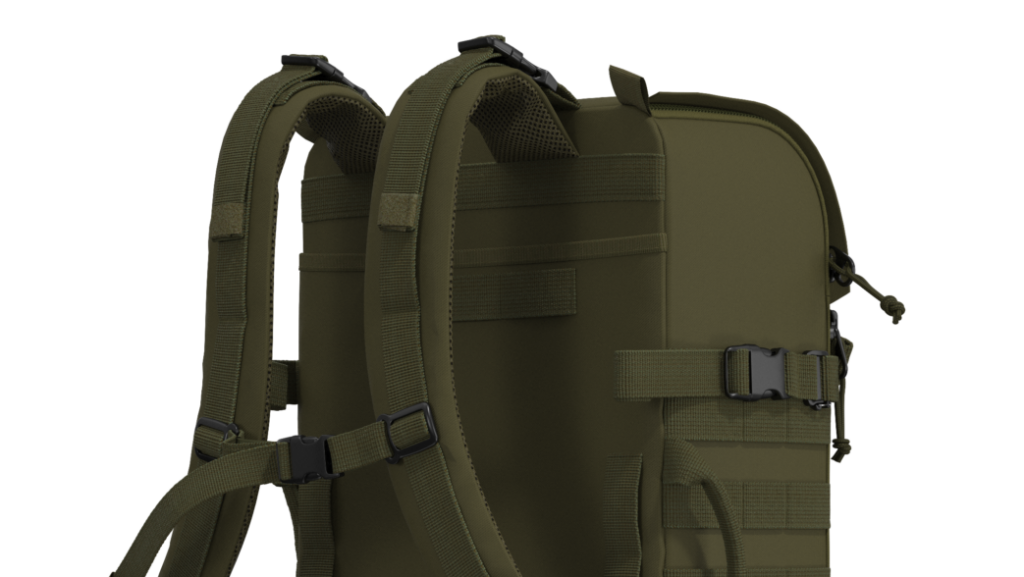
The first prototype is all about volume, proportion, and construction feasibility. Do not expect perfection in this round.
-
Structural Testing: Does the backpack stand upright? Are the shoulder straps positioned correctly for the target demographic?
-
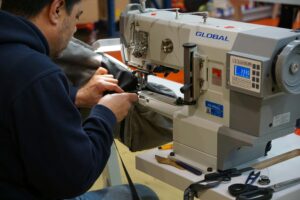
Factory Feedback: The sample room technicians will provide immediate feedback. If a specific pocket design is too complex and will slow down assembly-line efficiency, they will suggest structural modifications to optimize the manufacturing cost.
Step 4: Fitting, Testing, and Revisions
Once the first prototype is completed, it undergoes rigorous field testing.
-
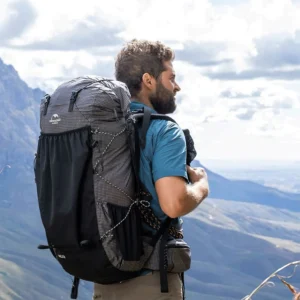
Load Testing: For technical and outdoor bags, dummy weights are added to test strap durability and the ergonomics of the back panel. This ensures weight is distributed properly across the user’s hips and shoulders. (Learn more about load distribution in our guide: [Insert Internal Link to Cluster 4: Backpack Ergonomics 101]).
-
Aesthetic Adjustments: You might realize the front pocket is too small for modern smartphones, or the top grab handle feels flimsy.
-
Revision Rounds: It is standard industry practice to go through 2 to 3 rounds of prototyping before the design is perfect.
Step 5: The Pre-Production Sample (The “Golden Sample”)
The final iteration of the prototyping process is the Pre-Production Sample (PPS), commonly known as the “Golden Sample.”
-
The Standard of Truth: This sample is made using the exact bulk materials, actual hardware, and final brand logos.
-
Quality Benchmark: Once you approve the Golden Sample, it is sealed and kept at the factory. Every single bag produced on the mass-manufacturing line must match this exact sample in accordance with international ASTM textile standards and quality control limits.
Accelerate Your Bag Development with Mimicry Saigon
The prototyping phase can be incredibly frustrating if you are dealing with communication barriers or factories that lack technical expertise. Misunderstood instructions lead to endless sample revisions, draining your budget and delaying your launch.
At Mimicry Saigon, our highly skilled sample room team specialized in technical, tactical, and outdoor backpacks ensures your ideas are executed flawlessly from the very first pattern.
👉 Discover how we can streamline your entire product journey from concept to mass manufacturing: Explore our Professional Backpack & Bag Design and Development Services in Vietnam.
[Request a Sample Development Quote ]