
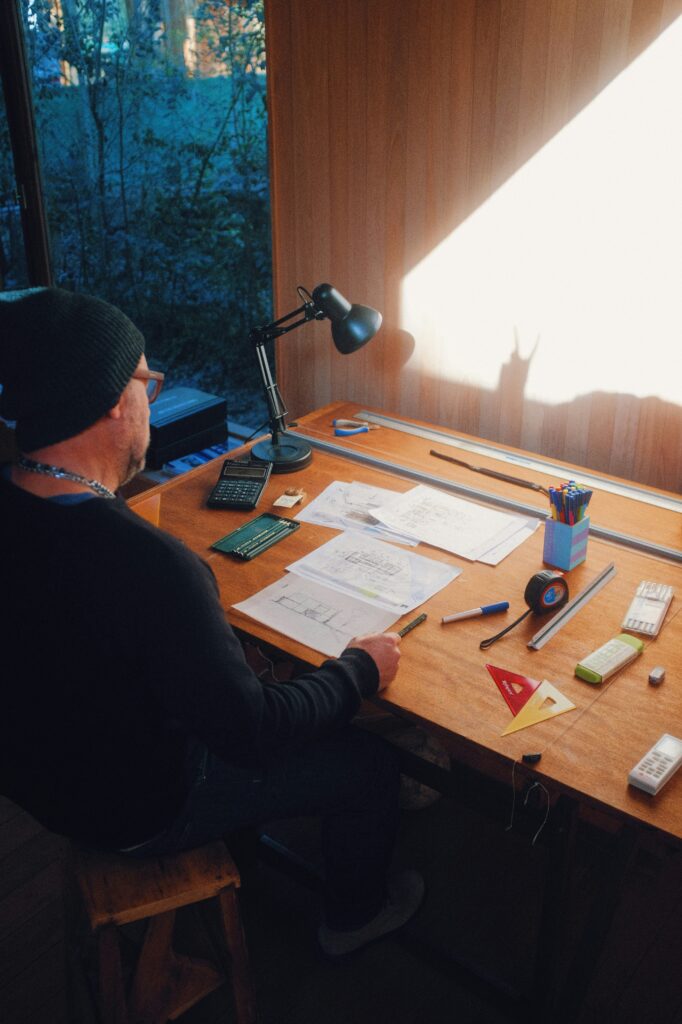
Developing high-performance backpacks, technical travel packs, and heavy-duty outdoor bags requires absolute precision. For brand founders, product directors, and sourcing managers from the USA, Europe, Australia, Japan, and Korea, the journey from initial concept to mass production can be daunting.
What happens if the factory misinterprets your structural sketch? What if the foam density fails real-world weight distribution tests, or the stitching pulls apart under heavy loads?
Repeated sampling errors don’t just drain your development capital—they delay retail launches, cause missed trade shows, and damage brand equity. To eliminate these risks, international brands must adopt a modern prototyping workflow. In this guide, we break down the debate between 3D Renders vs. Physical Samples, explain when to use each tool, and reveal how partnering with an expert Canvas backpack manufacturer protects your bottom line.
1. Why Infinite Sampling Cycles Destroy Brand Equity
Rushing into physical prototyping without clear technical documentation leads to operational chaos. When brands submit unrefined 2D sketches directly to overseas sample rooms, miscommunications are almost guaranteed:
-
Inflated Development Budgets: Every additional physical prototype revision incurs pattern-making charges, fabric cutting fees, and costly express shipping.
-
Material Misinterpretations: Without exact technical specifications, sample makers often guess lining fabrics, foam densities, or hardware tolerances. Consequently, the initial physical prototype frequently fails functional stress tests.
-
Missed Seasonal Delivery Windows: Prolonged prototyping loops push back bulk manufacturing. Missing a spring outdoor gear drop or autumn tech-wear launch means lost market share that cannot be recovered.
Partnering with an experienced Nylon backpack factory and product development team eliminates guesswork. By establishing digital precision before cutting raw materials, technical errors are resolved before they turn into costly physical mistakes.
2. What Are 3D Renders & When Should You Use Them?
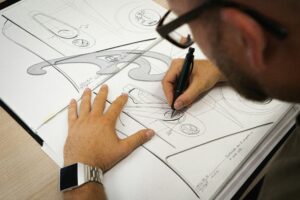
Digital 3D rendering (using advanced soft-goods software like CLO 3D, Browzwear, or SolidWorks) transforms 2D patterns and technical sketches into realistic, photorealistic digital prototypes.
3D DIGITAL RENDERING WORKFLOW
2D Techpack / Pattern ──► Digital Fabric & Color Mapping │ ▼ Photorealistic 3D Render ◄── Stress & Fit Simulation (Virtual)
When to Use 3D Renders:
-
Evaluating Proportions & Pocket Placement: Validate 3D volumes, panel curves, and zipper placements before spending money on physical sampling.
-
Rapid Colorway & Material Exploration: Test multiple colorways, camouflage patterns, or trim combinations instantly. Instead of dyeing custom canvas rolls or ordering small swatches, digital mapping allows real-time visualization utilizing color systems like PANTONE®.
-
Pre-Launch Marketing & Investor Pitching: Photorealistic 3D renders allow brands to launch Kickstarter campaigns, present B2B catalogs to buyers, or take pre-orders months before physical inventory arrives.
-
Pattern Correction at Early Stages: Detect fabric puckering, panel misalignment, or awkward seam intersections digitally.
Expert Insight: While 3D renders excel at visual validation, they cannot simulate the tactile hand-feel of heavy-duty cotton canvas, the stiffness of military-grade webbing, or long-term zipper friction under max-load stress.
3. What Are Physical Samples & When Are They Mandatory?
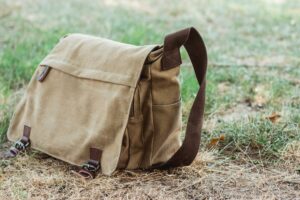
Physical samples are real, tangible prototypes built in a sample room or directly on the production line of a specialized Canvas backpack manufacturer, utilizing specified fabrics, hardware, foams, and stitching techniques.
PHYSICAL SAMPLING PIPELINE
PROTO SAMPLE • Verify 3D volume • Paper/canvas mock
SALES / FIT SAMPLE • Real production fabric • Load & stress test
PRE-PRODUCTION (PP) • Factory line run • Golden QA standard
When to Use Physical Samples:
-
Ergonomics & Heavy Load Testing: A technical backpack must carry weight comfortably. Physical samples are required to pack 10kg to 20kg of gear to evaluate harness comfort, shoulder strap padding, and hip belt load transfer.
-
Field & Weather Resistance Testing: Take the bag into real-world environments to test water resistance, abrasion durability, seam tear strength, and zipper endurance under extreme conditions.
-
Factory Line Proofing (Pre-Production PP Sample): Built directly on the mass-production assembly line to test operator sewing speeds, seam allowances, and bar-tack reinforcement machinery.
-
The Golden Sample Standard: The final physical sample serves as the binding quality assurance benchmark for on-site QC inspectors during bulk manufacturing.
4. 3D Renders vs. Physical Samples: A Strategic Comparison
Understanding the strengths and limitations of both mediums allows product directors to build a faster, cost-effective development loop:
| Evaluation Factor | 3D Digital Renders | Physical Samples |
|---|---|---|
| Development Cost | 🟢 Extremely Low (Digital File) | 🔴 High (Materials, Labor, Shipping) |
| Turnaround Time | 🟢 Rapid (1 – 3 Days) | 🔴 Slow (2 – 4 Weeks) |
| Ergonomics & Load Testing | 🔴 Virtual Only (Cannot Test Weight) | 🟢 100% Accurate Real-World Test |
| Colorway & Pattern Testing | 🟢 Unlimited Variations Instantly | 🔴 Costly Custom Dye/Print Runs |
| Pre-Order Marketing | 🟢 Ideal for Crowdfunding & Catalogs | 🟢 Ideal for Live Lookbooks |
| Primary Objective | Lock Aesthetics, Volume & Design | Lock Engineering, Durability & Quality |

5. The Hybrid Framework: The Optimal Prototyping Loop
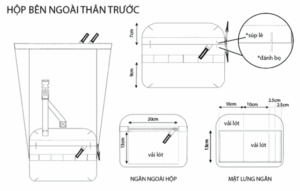
High-performance outdoor and tech-wear brands do not choose between 3D renders and physical samples—they integrate both into a streamlined, risk-free development pipeline.
HYBRID DEVELOPMENT PIPELINE
-
Stage 1: Techpack & 2D Pattern Creation
-
Focus: Establish foundational specs and measurements.
-
-
Stage 2: 3D Digital Render & Validation
-
Focus: Finalize Volume, Pocket Layouts & Colorways.
-
-
Stage 3: Physical Technical Sample (Fit & Stress Test)
-
Focus: Test Real Canvas/Nylon, Ergonomics & Hardware.
-
-
Stage 4: Pre-Production Golden Sample
-
Focus: Approve Factory Line Quality & Mass Production.
-
By resolving 90% of visual, proportional, and aesthetic decisions within 3D Digital Renders, brands reduce physical sampling requirements down to just 1 or 2 targeted rounds. This hybrid approach cuts product development costs significantly while accelerating your launch timeline.
6. MIMICRY SAI GON: Your Trusted Local Partner in Vietnam
Are you looking to optimize costs, shorten product development time, and eliminate manufacturing errors?
MIMICRY SAI GON_
Your trusted local partner, collaborating with you on bags/backpack design, product development, factory sourcing, quality control and cost optimization.
Located in Ho Chi Minh City, Vietnam—the world’s premier manufacturing hub for high-end technical gear, canvas backpacks, and performance soft-goods—MIMICRY SAI GON bridges the gap between creative design concepts and flawless factory execution.
We act as your extended local team on the ground, protecting your brand from technical mistakes, supplier miscommunications, and budget overruns.
Our Core Capabilities:
-
Handbag and Backpack Design: Transforming complex sketches and ideas into production-ready technical designs tailored for outdoor, travel, tech-wear, and tactical markets.
-
Product Development & Techpacks: Drafting precision 2D technical packs, digital pattern engineering, and managing the 3D-to-physical prototyping loop to keep sampling rounds to a minimum.
-
Factory Sourcing: Connecting your brand directly with vetted manufacturing facilities—including specialized Canvas backpack manufacturer and certified Nylon backpack factory setups—matching your target MOQs and quality standards.
Extended Services for Full Supply Chain Peace of Mind:
-
Brand Design: Developing cohesive visual identities that resonate with modern outdoor and tech-wear consumers.
-
Packaging Design and Consulting: Engineering durable, eco-friendly, and retail-ready packaging solutions.
-
Quality Control (QC): Performing rigorous on-site inspections during bulk production against approved Golden Samples following strict AQL guidelines.
-
Fast Delivery: Managing export documentation, customs clearance, and global freight forwarding to deliver finished goods smoothly to North America, Europe, Australia, and Asia.
Eliminate Technical Risk—Build Your Next Gear Line Today
Manufacturing technical backpacks and heavy-duty gear does not have to be a high-risk gamble. By leveraging precision 3D renders for initial validation, enforcing a strict 2-sample physical limit, and partnering with an expert Nylon backpack factory, you convert development risks into market advantages.
Whether you are an established outdoor gear brand expanding your technical line or a tech-wear startup preparing for your first Kickstarter release, having an experienced technical development team in Vietnam ensures your vision turns into a retail-ready success.
Ready to Bring Your Concept to Life?
Stop guessing and start building with total confidence. Partner with MIMICRY SAI GON to streamline your prototyping loop, avoid costly factory errors, and optimize your production budget today.
-
Website: https://mimicrysaigon.com/
-
Services: Handbag & Backpack Design | Product Development | Factory Sourcing | Quality Control | Fast Deliveryv